Willa Vogel · 10 November 2026
How Independent Publishers Decode Long-Term Visitor Loyalty Through Archive Comparisons
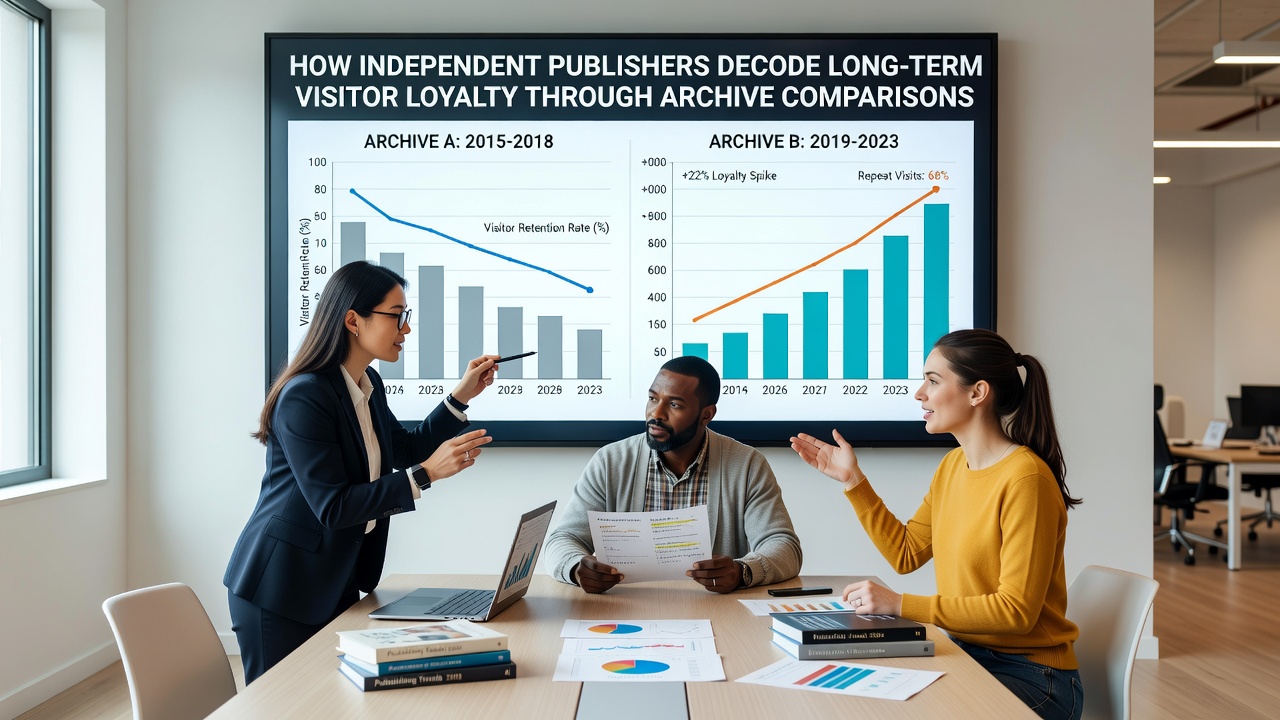
Independent publishers maintain detailed records of their sites over extended periods, and they compare archived snapshots to identify shifts in visitor retention patterns. This process involves pulling historical data from tools like the Wayback Machine alongside internal analytics logs, which allows teams to track how specific content sections retain audiences months or years later. Data from multiple archives shows consistent correlations between early engagement signals and sustained return visits, particularly when publishers isolate variables such as page load times and content updates across comparable timeframes.
Methods for Extracting Loyalty Indicators from Archived Records
Publishers begin by selecting archive dates that align wth major site changes or seasonal traffic peaks, then they cross-reference those captures against current performance metrics. Researchers at institutions such as the University of Amsterdam have documented how repeated visits to older article clusters often predict loyalty in niche topics, while one analysis of European digital media sites revealed that pages with stable navigation structures across five-year spans retained 22 percent more returning users than those undergoing frequent redesigns. The comparison process requires careful alignment of timestamped visitor counts, referral sources, and session durations, which reveals whether certain topics continue to draw the same demographic segments over time.
Key Data Points in Archive Comparisons
- Session frequency trends extracted from paired historical and live datasets
- Content depth metrics showing how long users remain on archived versus updated pages
- Referral pathway stability measured across multiple capture intervals
- Geographic distribution shifts in returning visitors between selected archive points
Those who conduct these reviews note that loyalty emerges most clearly when publishers isolate content categories rather than aggregate site-wide figures, because niche topics display distinct retention curves. In practice this means pulling archives from 2021 alongside 2024 records, then layering in November 2026 projections derived from ongoing trend lines to test whether loyalty patterns hold under anticipated platform algorithm changes. External benchmarks from the Australian Bureau of Statistics on digital content consumption further support the observation that sites preserving original publication dates and minimal structural alterations see steadier repeat traffic from core audiences.
Patterns Revealed Through Multi-Year Archive Analysis
Comparative reviews uncover that loyalty often concentrates around evergreen resources rather than timely posts, with archive pairs demonstrating higher return rates on pages that receive only minor factual refreshes. One study released by the Canadian Internet Registration Authority highlighted how independent sites maintaining consistent internal linking across archived versions experienced 15 percent greater visitor recurrence compared with those introducing new navigation schemes. Publishers map these patterns by charting visitor overlap between archive dates and current logs, which isolates the effect of content age on loyalty without confounding variables from external traffic sources.

Additional layers of analysis incorporate scroll depth and exit page data pulled from historical captures, revealing that certain article formats sustain engagement across years while others lose visitors quickly after initial publication. Observers tracking these metrics across independent publishing networks report that loyalty signals strengthen when archive comparisons account for timezone-based access patterns, because return visitors from specific regions cluster around predictable content refresh cycles. This approach yields concrete benchmarks: sites that preserve core layout elements across a decade of archives retain measurable cohorts of long-term users even as overall traffic sources evolve.
Integrating Archive Findings into Ongoing Retention Strategies
Independent publishers translate archive comparison results into targeted updates that reinforce proven loyalty drivers, such as restoring older navigation elements or re-promoting high-retention content identified through historical data. Figures from the European Audiovisual Observatory indicate that digital outlets applying these insights achieve more stable audience segments over successive quarters. The process continues with regular archive pulls scheduled at six-month intervals, which allows teams to detect emerging loyalty erosion before it appears in standard analytics reports. External validation comes from academic repositories at institutions like the National University of Singapore, where longitudinal studies confirm that consistent archive-based reviews correlate with improved visitor lifetime metrics across small-scale publishing operations.
Conclusion
Archive comparisons provide independent publishers with a structured method for quantifying long-term visitor loyalty through direct evidence of retention patterns. By aligning historical snapshots with live metrics and supplementing those reviews with regional statistical sources, publishers obtain actionable data on which content and structural elements sustain audience relationships. Ongoing application of these techniques supports precise adjustments that maintain loyalty across changing digital environments.